


- Housekeeping Full Form and Meaning in a Hotel
- What Does MUR Mean in a Hotel?
- Essential Hotel Housekeeping Terms and Abbreviations
- Types of Housekeeping Services in Hotel: Housekeeping Full Form
- Housekeeping in Hotel: Equipment & Supplies
- The Hotelier's Checklist
- FAQs: Housekeeping Terminology
- Housekeeper Career Path
Housekeeping Full Form and Meaning in a Hotel
Hotel housekeeping terminology helps room attendants, supervisors, front-office employees, and hospitality students communicate clearly. Common housekeeping terms and abbreviations identify room conditions, guest requests, cleaning priorities, services, and operational procedures.
In this guide, you’ll learn 25 essential hotel housekeeping terms, including the housekeeping full form, common housekeeping short forms, and the meaning of MUR, HK, OCC, VC, VD, DND, and OOO. You’ll also discover what housekeeping means in a hotel and how these terms support efficient daily operations.
Quick answer: MUR stands for Make Up Room. In hotel housekeeping, MUR indicates that a guest in an occupied room has requested housekeeping service. HK is the common abbreviation for Housekeeping. Other frequently used room-status abbreviations include OCC for Occupied, VC for Vacant Clean, VD for Vacant Dirty, DND for Do Not Disturb, and OOO for Out of Order.
Hotel codes can vary by property and property-management system, so employees should always follow their hotel’s official terminology.
What Does MUR Mean in a Hotel?
MUR stands for Make Up Room in hotel housekeeping.
In hotel housekeeping, MUR indicates an occupied room where the guest is requesting housekeeping service. The request may be submitted through a door sign, an in-room panel, a hotel application, the front desk, or the hotel’s property-management system.
When a room is marked MUR, the assigned room attendant may:
Related Housekeeping Terms
- Make or refresh the bed
- Replace used towels
- Empty waste bins
- Clean the bathroom
- Dust or sanitize surfaces
- Vacuum or clean the floor
- Replenish toiletries and other amenities
Example:Room 305 is occupied and marked MUR. This tells the housekeeping team that the guest wants the room serviced.
MUR is a guest-service status rather than a checkout status. It should not be used to describe a vacant room requiring full turnover cleaning. Oracle Hospitality similarly describes Make Up Room as a request associated with an occupied room.
Essential Hotel Housekeeping Terms and Abbreviations

Effective communication is the cornerstone of any successful operation, and hotel room attendant is no exception. Understanding industry-specific terms and abbreviations fosters seamless collaboration within the department and ensures guests receive exceptional service. Let's embark on a journey through the fascinating world of hotel housekeeping lingo!
Room Status Terminology
Imagine a hotel bustling with activity. Guests check-in and out, room attendant staff meticulously clean rooms, and the front desk needs to maintain an accurate picture of room occupancy. This is where room status terminology comes into play.
| Housekeeping Term | Abbreviation | Meaning |
|---|---|---|
| Make Up Room | MUR | An occupied room where the guest has requested housekeeping service. |
| Occupied | OCC | A room in which a guest is currently registered or staying. |
| Vacant Clean | VC | An unoccupied room that has been cleaned and is ready for inspection or assignment, depending on hotel procedure. |
| Vacant Dirty | VD | An unoccupied room that requires cleaning before it can be assigned. |
| Occupied Clean | OC | An occupied room that has been serviced by housekeeping. |
| Occupied Dirty | OD | An occupied room that is scheduled for or requires housekeeping service. |
| Do Not Disturb | DND | The guest has requested privacy, so staff should follow the hotel’s DND procedure. |
| Out of Order | OOO | A room removed from inventory because of a significant maintenance or safety issue. |
| Out of Service | OOS | A room temporarily unavailable, usually because of a minor operational or maintenance issue. |
| Inspected | IP or INS | A cleaned room that has passed the hotel’s inspection process. |
| Due Out | DO | An occupied room whose guest is expected to check out that day. |
| Stayover | SO | A room occupied by a guest who is staying another night. |
Important: Housekeeping abbreviations are not completely universal. Codes can vary between hotels and property-management systems. Always consult the property’s standard operating procedures before acting on a room status.
Why Hotels Use Housekeeping Short Forms
- Occupied (OCC): This abbreviation simply indicates a room currently has a guest residing in it.
- Vacant (VAC): A vacant room is a clean room with no guests and is ready to be assigned to a new arrival.
- Out of Order (OOO): This signifies a room is unavailable due to maintenance or repairs. Guest services staff might be involved in preparing the room for these tasks.
- Clean Stayover (CS): A clean stayover indicates a room where the guest is staying for multiple nights and has opted not to have services that day. However, accommodation services might still replace towels or remove trash upon request.
- Dirty Stayover (DS): In contrast to a clean stayover, a dirty stayover signifies a room where the guest is staying for multiple nights and requires full guest services.
- Do Not Disturb (DND): This universally recognized symbol, often displayed on a guest room door hanger, politely informs staff that the guest wishes for privacy and doesn't require cleaning services at that time. Variations like "Privacy Please" convey the same message.
- Double-Locked (DL): Encountering a double-locked door might indicate a security concern or a guest who accidentally locked themselves out. staff should follow established protocols to handle such situations, often involving contacting security or the front desk.
Types of Housekeeping Services in Hotel: Housekeeping Full Form
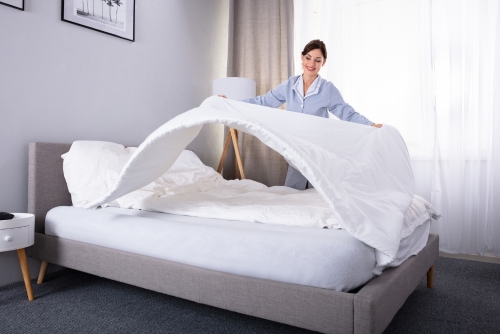
Beyond maintaining sparkling rooms, hotel housekeeping often plays a supporting role in room service operations. Understanding these terms ensures a smooth flow between departments.
- Turndown Service (TDS): This delightful service involves preparing a guest room for the evening. Guest services staff might adjust lighting, fold down bed covers, replenish towels, and place chocolates or mints on pillows, creating a welcoming ambiance for the guest's return.
- Express Service (EX): In some hotels, express service refers to limited accommodation services offered for short stays or upon guest request. This might involve replacing towels and emptying trash but might not include a full cleaning.
- Incidentals: Room service meals and minibar items fall under the category of incidentals. Staff might be responsible for noting these items used by the guest, which are then added to the final bill.
HK Staff Meaning in Hotel
HK Staff stands for Housekeeping Staff in the hotel industry.
Housekeeping staff are responsible for maintaining cleanliness, hygiene, and guest comfort throughout the property. Their duties include cleaning guest rooms, changing linens, replenishing amenities, cleaning public areas, and ensuring hotel standards are met.
Example: The HK staff cleaned and prepared all guest rooms before check-in time.
Housekeeping in Hotel: Equipment & Supplies
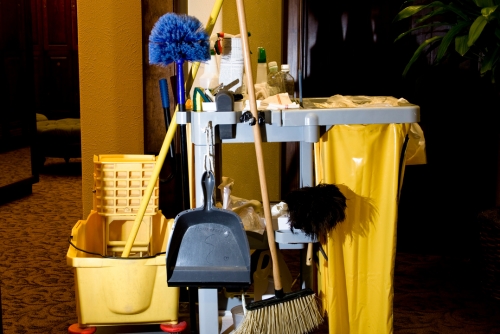
A well-equipped housekeeping cart is an extension of a hotel housekeeper's expertise. Let's explore some essential tools of the trade:
- Housekeeping Cart: This mobile workstation carries all the cleaning equipment and tools needed to transform guest rooms. It typically features compartments for cleaning solutions, linens, towels, and waste disposal bins.
- Microfiber Cloths: These versatile cloths are a staple in hotel accommodation services due to their effectiveness in capturing dust, dirt, and allergens without leaving streaks or requiring harsh chemicals.
- Disinfectant: Maintaining a hygienic environment is crucial in hotels. Guest services staff uses disinfectants to sanitize surfaces like countertops, bathroom fixtures, and doorknobs, ensuring guest safety and well-being.
Housekeeping Procedures & Protocols

Efficiency and consistency are hallmarks of exceptional hotel accommodation services. Understanding these procedures ensures a streamlined workflow and delivers a predictable level of cleanliness for guests.
-
Turnover (TO): This term refers to the complete cleaning and preparation of a guest room for a new arrival. A thorough turnover involves tasks like:
- Removing all traces of the previous guest's belongings.
- Stripping and remaking beds with fresh linens and crisp pillowcases.
- Cleaning and disinfecting bathrooms, including toilets, sinks, showers, and bathtubs.
- Vacuuming carpets and dusting furniture.
- Replenishing all amenities like toiletries, coffee, and tea supplies.
- Room Inspection: Before a room is declared ready for a new guest, a meticulous inspection is conducted. This ensures all cleaning tasks are completed to a high standard and identifies any areas requiring further attention.
- Lost and Found: Hotels are treasure troves of forgotten items. Staff plays a vital role in managing lost and found. This might involve collecting lost items, logging them, and following established procedures to reunite them with their rightful owners.
- Amenity Replenishment: From fluffy towels to refreshing toiletries, guests expect a well-stocked room. Housekeeping staff ensures these amenities are replenished during turnovers, turndown service, or upon request.
Guest Communication & Requests
Exceptional hotel accommodation services hinge on clear communication with guests. Here are some key terms to remember:
- Guest Request (GR): Guests may have specific requests related to room attendant services. This could range from requesting additional towels to asking for hypoallergenic bedding. Staff should be attentive to these requests and fulfill them promptly.
- Housekeeping Supervisor: The housekeeping supervisor plays a crucial role in managing various departments and ensuring guest requests are addressed efficiently. They might assign tasks, troubleshoot issues, and liaise with the front desk to ensure guest satisfaction.
- Special Requests: Some guests may have special requests, such as needing a crib for a baby or a specific type of pillow. Guest services staff should communicate these requests to the appropriate department to ensure they are met.
Department Management & Operations
A well-oiled housekeeping department is the backbone of a smoothly functioning hotel. Let's delve into some key management terms:
- Housekeeping Department (HK): This refers to the entire team responsible for maintaining the cleanliness and hygiene of guest rooms, public areas, and sometimes even back-of-house spaces.
- Housekeeping Manager: The director of housekeeping is the leader of the department, overseeing hotel staff schedules, training, and ensuring adherence to quality standards.
- Housekeeping Schedule: Creating an efficient room attendant schedule is crucial to maximizing productivity. Factors like room occupancy, room types, and cleaning time per room are considered when creating the schedule.
The Hotelier's Checklist

In large Canadian hotels, ensuring a seamless guest experience hinges on the coordinated efforts of various departments. The housekeeping department, led by the executive housekeeper and supported by floor supervisors and assistant housekeepers, tackles a wide range of housekeeping duties across all areas of the hotel. From the sparkling guest rooms and well-maintained common areas like the lobby and ground floor to the linen room where fresh towels and sheets are readied, housekeeping staff pay special attention to detail. They utilize specialized equipment like vacuum cleaners and housekeeping trolleys to tackle everything from dust bunnies to water stains, ensuring a hygienic and comfortable environment. The engineering department works closely with housekeeping to address any maintenance issues that might arise, while the laundry staff plays a crucial role in keeping the hotel stocked with clean linens.
Coordination between the housekeeping department, front office (which manages bookings and guest requests), and the uniform room (ensuring staff uniforms are clean and presentable) is vital. Even seemingly minor details, like ensuring fresh air circulation through proper ventilation or replacing a flickering TV in a guest room, can significantly impact a guest's experience. Ultimately, efficient housekeeping services are a real threat to germs and grime, allowing staff to clean rooms in less time and with less workload, freeing them to dedicate special attention to guest comfort and satisfaction.
FAQs: Housekeeping Terminology
Q1. How to Become a Hotel Housekeeper?
A high school diploma or equivalent is typically sufficient. However, strong cleaning skills, attention to detail, and excellent communication abilities are highly sought-after qualities. Many hotels offer on-the-job training, and some positions might require specific certifications.
Q2. What is housekeeping in a hotel?
Hotel housekeeping is the department responsible for maintaining cleanliness, hygiene, order, appearance, and room readiness throughout guest rooms, public areas, and selected operational spaces.
Q3. What is the short form of housekeeping?
The most common housekeeping short form is HK. Hotels also use abbreviations such as MUR, OCC, VC, VD, DND, OOO, and OOS.
Q4. What does MUR stand for in a hotel?
MUR stands for Make Up Room. It indicates an occupied room where the guest has requested housekeeping service.
Q5. What is the meaning of MUR in housekeeping?
In housekeeping, MUR is a guest-service request telling the hotel that the guest wants the occupied room cleaned or refreshed.
Q6. Does MUR mean the guest has checked out?
No. MUR normally applies to an occupied room. A checked-out room requiring cleaning is generally recorded as vacant dirty or under another turnover status used by the hotel.
Q7. What are common housekeeping terms and abbreviations
Common housekeeping terms include HK for Housekeeping, MUR for Make Up Room, OCC for Occupied, VC for Vacant Clean, VD for Vacant Dirty, DND for Do Not Disturb, OOO for Out of Order, and OOS for Out of Service.
Q8. Are housekeeping abbreviations the same in every hotel?
No. Abbreviations may vary according to the hotel, brand, region, and property-management system. Employees should follow their property’s approved terminology and procedures.
Housekeeper Career Path
Professional Development Opportunities: "For housekeepers seeking to further their careers, the International Executive Housekeepers Association (IEHA) offers a wealth of professional development opportunities International Executive Housekeepers Association.
Housekeeping Terminologies
The world of hotel housekeeping is an intricate dance of efficiency, guest satisfaction, and maintaining high standards of cleanliness. By mastering the terminology, understanding the procedures, and embracing the challenges, you can embark on a rewarding career path in the dynamic hospitality industry. So, are you ready to unlock the secrets of a hotel room attendant and become a hospitality pro?